Art · Money
The Anatomy of a Price
Six thousand euros for a canvas is not a number somebody felt like. It is the sum of a size, a career stage, a gallery share, a tax and a strategy, and every part can be asked about.
Nothing in the art world is as misunderstood as its prices, mostly because nobody explains them and because the people who set them have an interest in their seeming mysterious. They are not. A primary market price, which is what a gallery asks for a new work by an artist it represents, is built from a handful of parts that can be listed on a napkin.
Size first
Almost every gallery prices an artist's work on a grid by size. A painter with a modest reputation might have a line that runs from 1,800 euros for a 40 by 50 centimetre canvas to 9,000 for a 150 by 200. The steps between them are not proportional to the area. Small works are expensive per centimetre and large works are cheap per centimetre, because a large painting is not five small ones: it is harder to sell, harder to ship and easier to argue over.
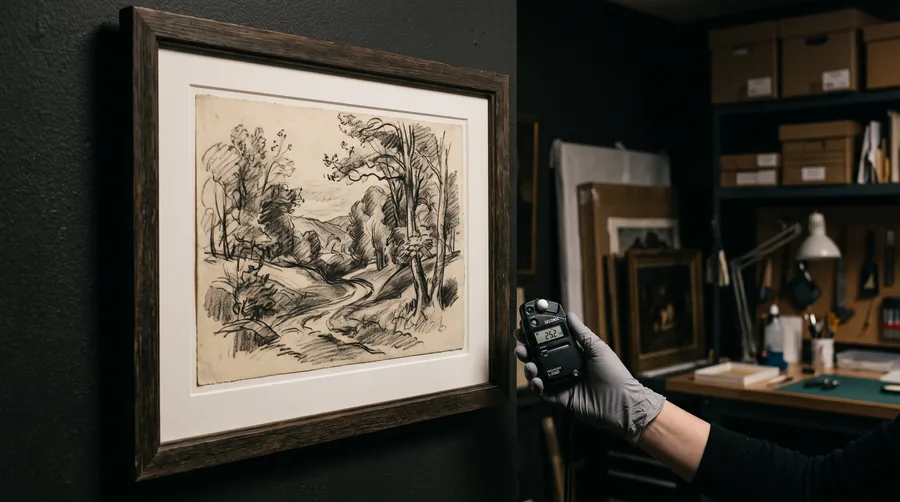
Works on paper sit on a second, lower grid, typically a third to a half of the price of a canvas of the same size. Editions sit on a third grid of their own, divided by the size of the edition.
The career stage
The grid moves up with the artist's biography, and it moves in steps rather than a curve. A graduate show, a first solo exhibition, a second gallery in another country, a museum acquisition, a monograph, a biennale: each one entitles the gallery to raise the grid by 10 to 25 percent. Raising it faster than the biography justifies is the most common mistake in the trade, because prices in the primary market are not supposed to go down. A gallery that has to lower a grid has damaged the artist, and everyone who bought at the old price.
The price is a promise about the next ten years. That is why we are slow with it.
A gallerist in Berlin
The split
Of the number on the list, the artist usually receives half. The gallery keeps the other half and pays from it for the space, the fair booths, the shipping, the framing, the dinners, the catalogue and the assistant who answers your email. Fifty fifty is standard for emerging and mid-career artists; established artists negotiate 60 or 70 percent in their favour, and a handful of the very famous own the whole relationship.
Discounts come out of the gallery's half, which is why they are real but limited. Ten percent for a collector who has bought before is normal. Fifteen for a museum. Twenty is rare and usually means the gallery wants the work in a particular collection more than it wants the money.
Taxes and the invoice
In Germany the reduced rate of seven percent returned to sales of artworks in 2025, which matters at 6,000 euros. Ask whether the price is quoted with or without it; galleries that sell to businesses often quote net. Ask also for a proper invoice with the artist's name, the title, the year, the medium, the dimensions and the edition number if there is one. That document is the beginning of the work's provenance and, one day, its resale value.
What the red dot means
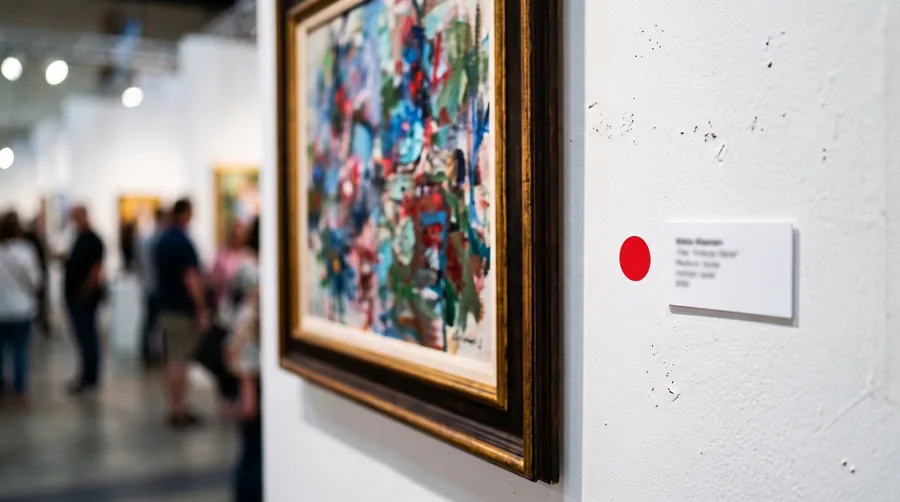
At a fair or an opening, a red dot beside the label means sold, and a half dot or a small green one usually means reserved. Reservations are polite fictions that last a few days; if you want the work, say so, and ask how long the reservation runs. A work that is sold at the opening was in most cases sold before the opening, to a collector the gallery telephoned the week before. This is neither a scandal nor unusual. It is why the second question to ask a gallery is not what is available but what is coming.
Secondary prices are a different animal
Everything above describes the primary market. Once a work has been sold and is sold again, at auction or through a dealer, the price is whatever two people agree, and the biography of the object matters as much as the biography of the artist. Auction houses add a buyer's premium of roughly a quarter on top of the hammer price, and in the European Union an artist's resale right takes a small percentage from the seller on most resales above a modest threshold, capped at 12,500 euros. A 10,000 euro hammer price therefore costs the buyer about 12,600 and pays the seller a little under 9,600. Neither number is the one printed in the newspaper.
None of this is secret. It is simply unmentioned, on the assumption that asking would be vulgar. It is not vulgar. It is the one part of collecting that is exactly like buying anything else.