Design · Fashion
Litkovska's STRICHA on SHOWstudio: Kosarev's Faces, Sewn for Paris
For spring and summer 2027, Liliia Litkovska staged an encounter at Café Beaubourg and built the method of a Ukrainian avant-garde artist into the clothes.

Fashion rarely comes as close to art history as it does in Liliia Litkovska's collection for spring and summer 2027. SHOWstudio, the fashion platform founded by Nick Knight, featured the show on 6 October 2026 in its coverage of the Paris collections. The collection is called STRICHA, and the word carries the whole idea. In one of Ukraine's dialects, stricha means an encounter, and that meaning became the starting point for everything that followed.
A café opposite the Pompidou
The setting took the idea literally. The show took place at Café Beaubourg, facing the Centre Pompidou, a place long known as a meeting point for the city's artists and writers, and it recreated the atmosphere of a casual encounter over morning coffee. For LITKOVSKA, the house explains, an encounter is never simply two people occupying the same space. It is a moment that can strip away what is constructed, the roles we perform and the surfaces we use to navigate the world, and reveal what remains underneath.
This is a show about encounters. We have thousands in a lifetime, but there is one that matters most: the encounter with yourself.
Liliia Litkovska
Kosarev, cut and reassembled
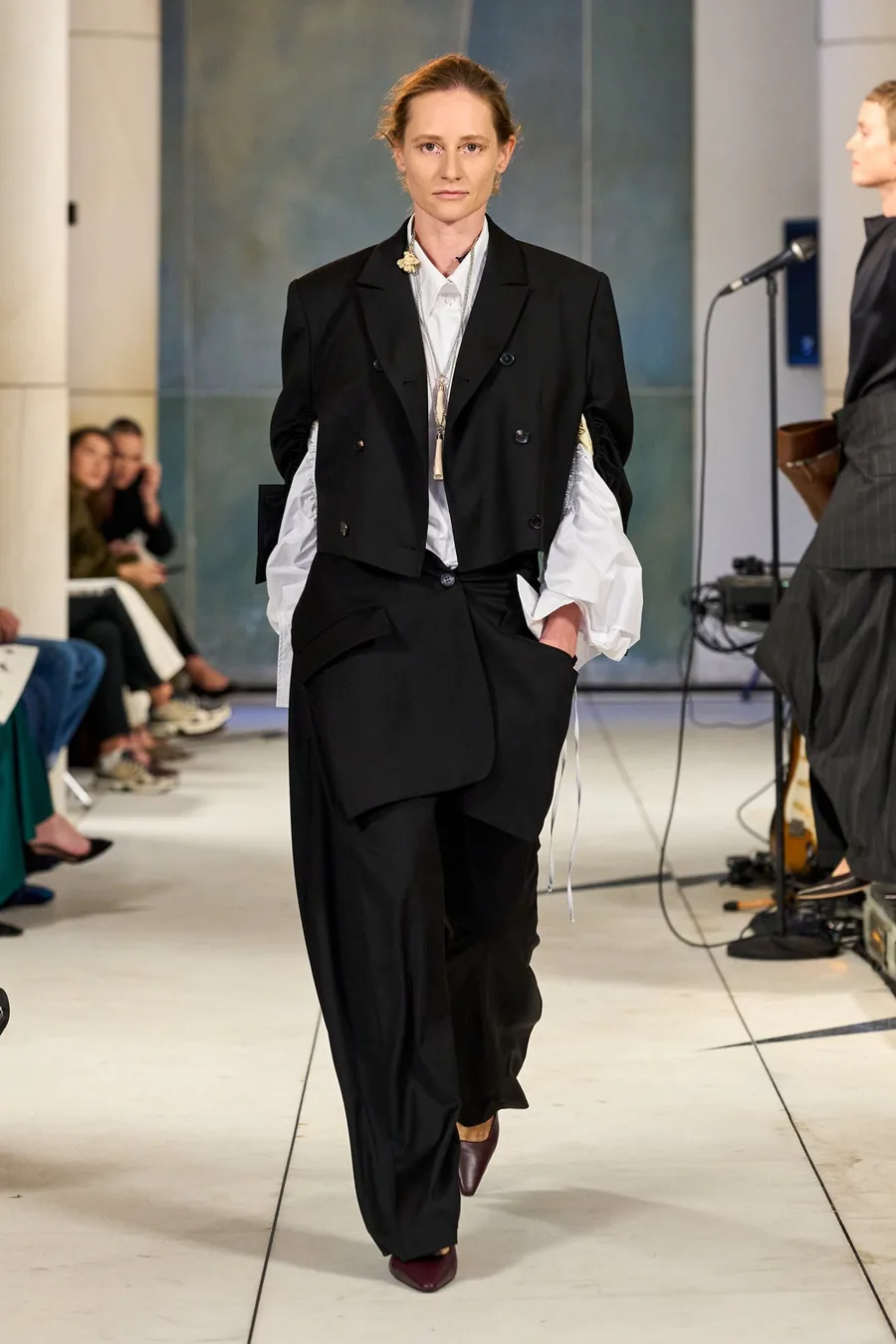
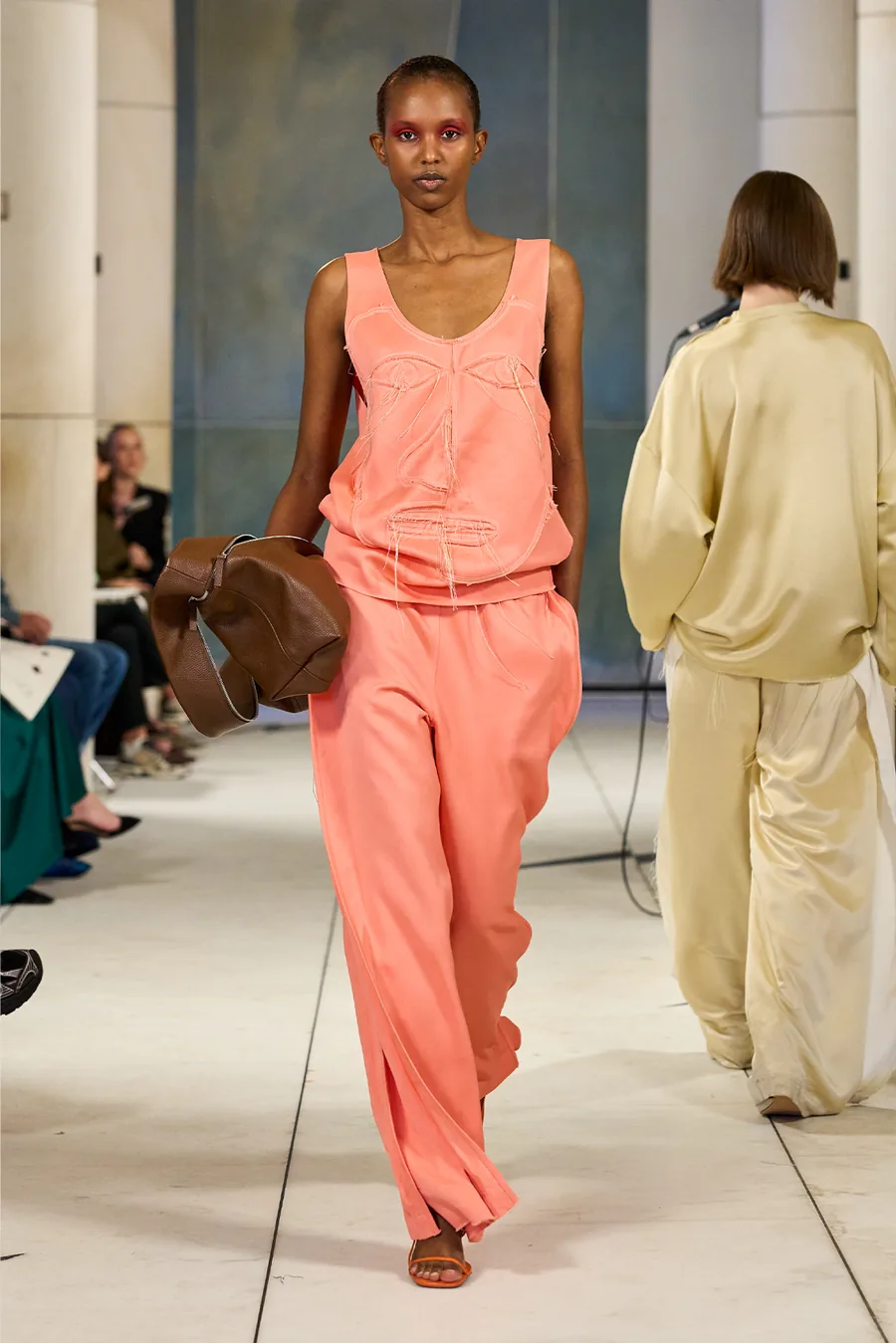
For garelia readers, the most interesting figure in the room is an artist. The collection draws on Borys Kosarev, one of the founding figures of the Ukrainian avant-garde, and in particular on his series of collage portraits and masks, faces and forms shattered into geometric planes. Litkovska does not illustrate his work. She builds his method directly into the construction of the garments and translates his fragmented faces into appliqué, collage and prints.
The house frames the show as a meeting that history never arranged: through STRICHA, Kosarev's vision comes to Paris, creating the encounter between his work and the city that never took place in his lifetime. Staging it a few steps from a museum of modern art makes the gesture legible to anyone walking past.
No wrong side
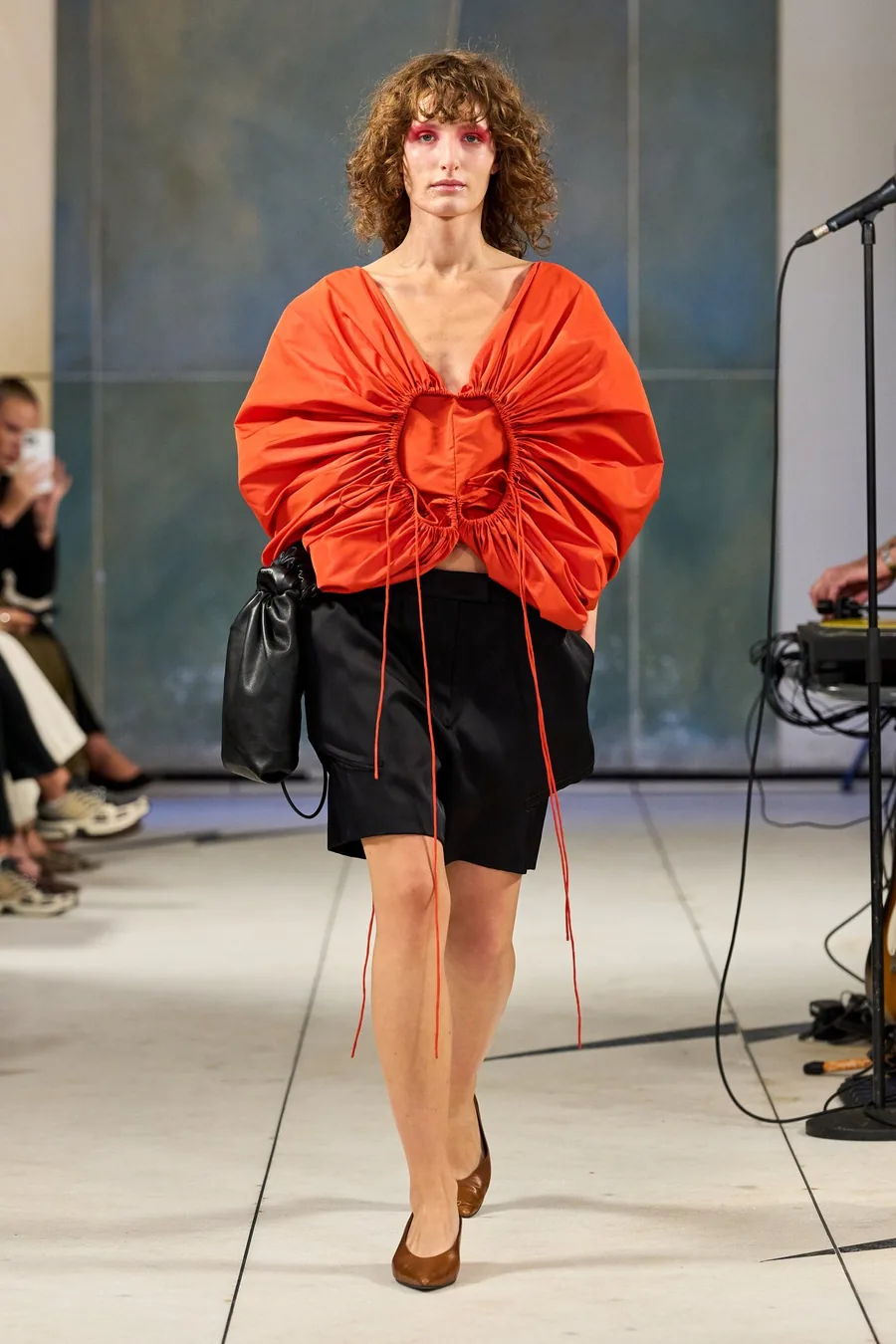
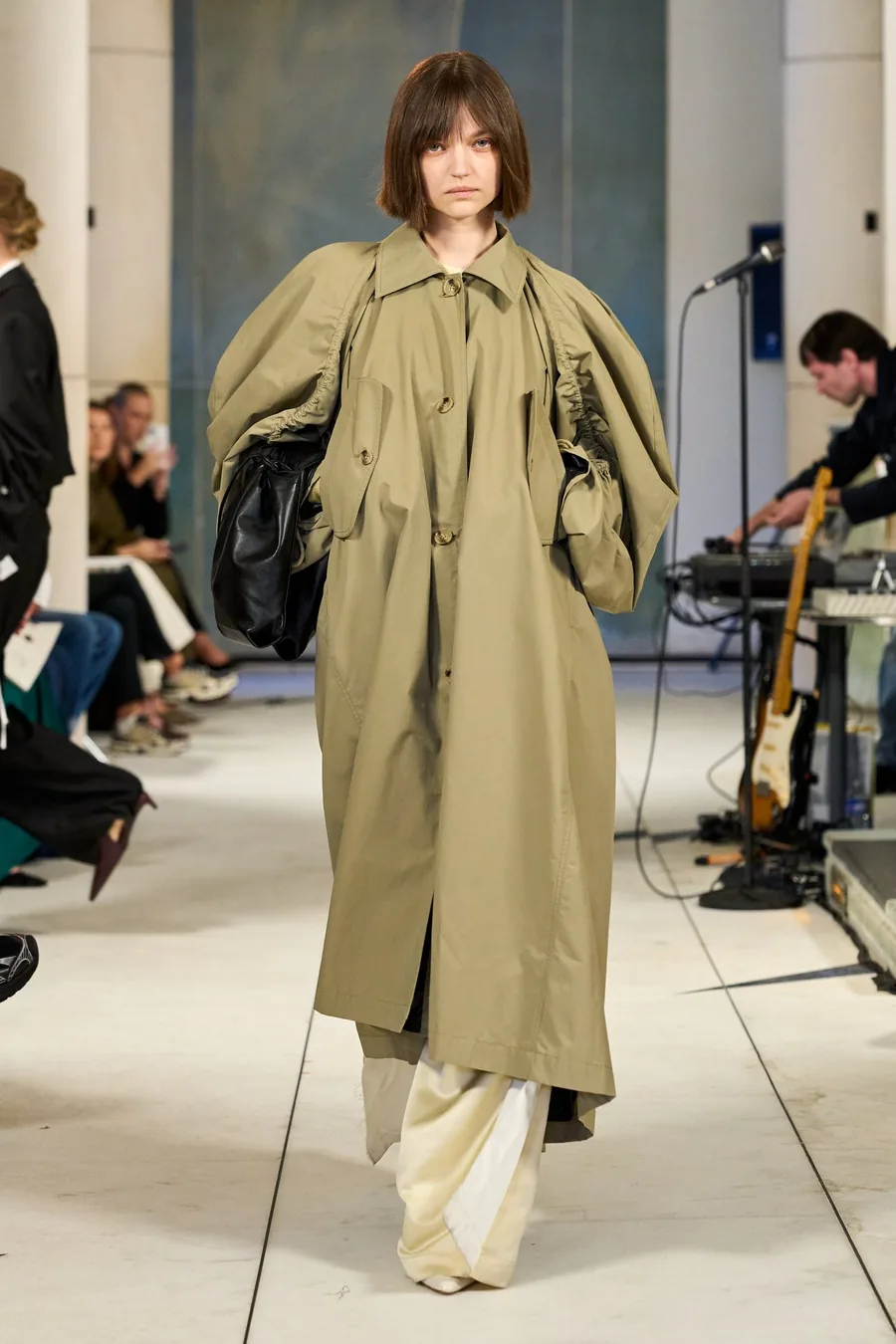
The same language of fragmentation runs through the cut. Construction is deliberately left visible, with seams highlighted rather than hidden. Familiar forms change their nature: a voluminous blouse unfolds into a long dress, a cape becomes a coat, and traditional Ukrainian homespun weave is turned inside out so that its inner side comes to the surface. It continues one of the house's founding ideas, summed up in five words: there is no wrong side.
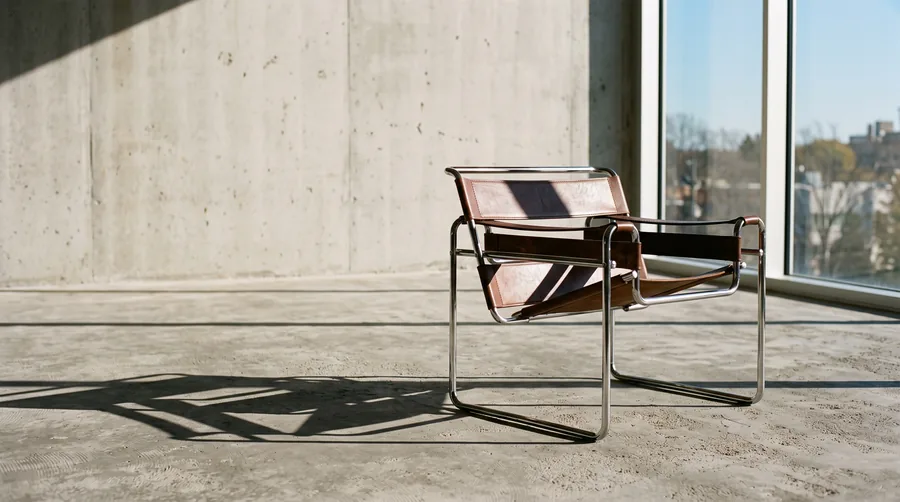
For a design reader that sentence deserves a pause. A visible seam is the textile cousin of the exposed joint in good furniture, an honest account of how a thing was made, offered as part of its beauty.
Made in wartime
The collection does not pretend to come from nowhere. In the words of the house, the search for what lies beneath takes on a particular clarity in Ukraine today, because war has a way of stripping away the unnecessary and making clearer what is essential. For LITKOVSKA, remaining open in such circumstances, to love, to create, to meet new people, becomes a conscious choice. The message SET MISSING. DESTROYED BY MISSILE remains a reminder of the reality from which the collection emerges, and of the decision to continue creating despite it.