Design · Authenticity
Original, Reissue, Fake
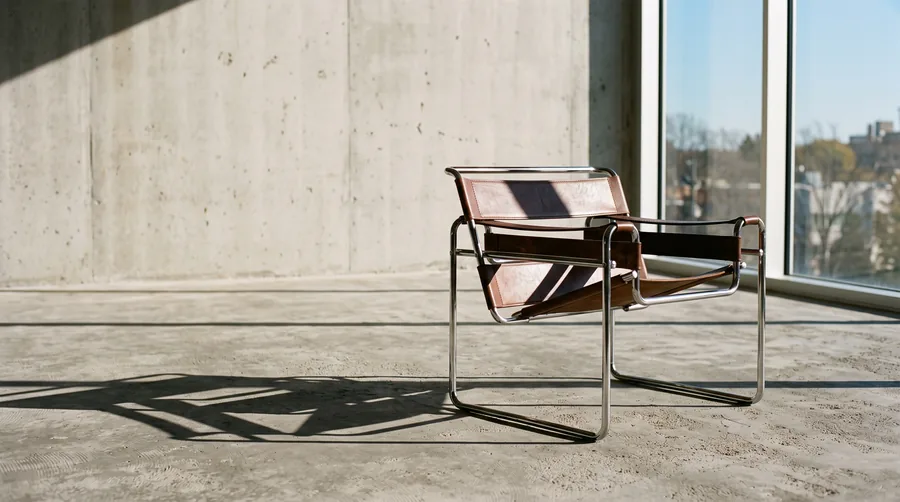
Three chairs, one shape, prices a decade apart. The marks under the seat, the weld on the frame and the weight in your hands tell them apart, and so does the invoice.
The same lounge chair can be bought for 9,000 euros, for 3,500 and for 600. The three objects look alike in a photograph, and two of them are legitimate. Knowing which is which is the whole skill of buying design, and it comes down to three words that the trade uses precisely and everyone else uses loosely.
Original
An original is an object made by the manufacturer that held the right to make it at the time, to the designer's specification. It can be from 1962 or from last week. Vintage originals, made in the first decades of production, are what dealers and auction houses mean when they say original without qualification, and they carry a premium for age, patina and the story. A chair made by the licensed maker in 2026 is also an original, and a sensible buyer of a chair to sit on prefers it.
Reissue
A reissue is an object put back into production, by the licensed maker or the designer's estate, after a gap. Many of the classics on the Register are reissues: designs from the 1920s that were made for a few years, forgotten, and revived by an Italian or Danish manufacturer in the 1960s or the 1980s from the original drawings. A reissue is legitimate, licensed and usually better made than the first run, because the factory has learnt. It is not the same as a vintage original and should not be priced as one. The word on the invoice matters.
Fake
A fake is a copy of a protected design, made without a licence, sold with or without the pretence of being something else. Some are open about it and call themselves replicas, inspired by, in the style of. Others carry counterfeit labels. Either way, the object is not the design, because the design is the drawing, the materials, the tolerances and the licence, and the copy has the shape only. In most of Europe a copy of a design protected by copyright cannot legally be sold; the market lives in countries with weaker protection and in websites that ship from them.
A copy is a photograph of a chair that you can sit on. Sometimes.
A vintage dealer in Copenhagen

The marks
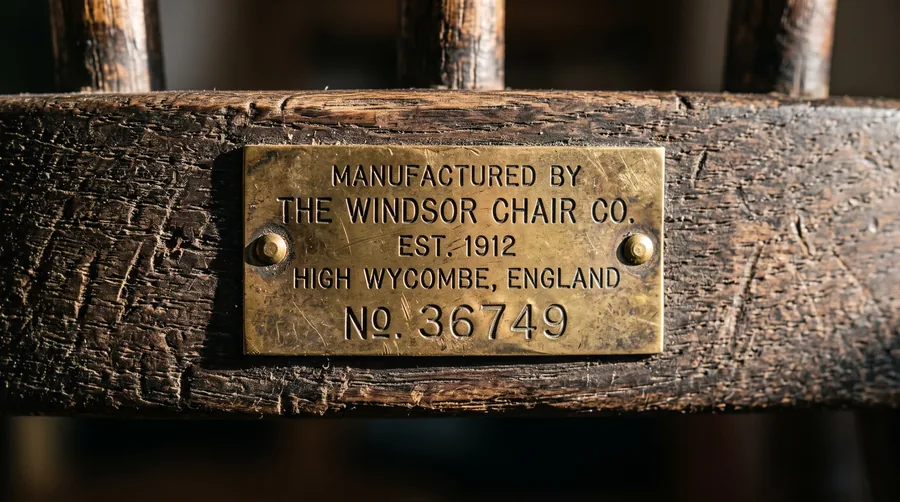
Licensed makers mark their products, and the marks change over time, which is what makes them useful. A Danish manufacturer's chairs carry a stamp or label under the seat with the maker's name and often a year code; the design of the label changed by decade. A German and a Swiss maker of moulded chairs label the shell and the base. An American company fixed a medallion to its lounge chair and a label to the ottoman, and a Swiss licensee did the same in Europe with its own label. Italian manufacturers of the Bauhaus reissues engrave a serial number and the designer's signature into the frame. A Finnish maker stamps its bent birch, an Austrian one its bent beech.
The Register on this site lists, for each of forty-eight objects, where the mark should be and what it should say. Learn to turn a chair over before you talk about the price.
Beyond the mark
Labels can be transferred and stamps faked, so the second layer is the object. Weight: a licensed chair in steel and leather is heavier than a copy, because the steel is thicker. Welds: ground smooth and invisible on the original, visible or filled on the copy. Proportions: copies are made from photographs and are usually a few centimetres off in the one dimension the photograph could not show. Leather: full aniline with grain and small scars on the original, corrected and printed on the copy. Chrome: deep and slightly warm on the original, thin and blue on the copy, and the copy pits in three years. Foam: a copy sags in a year, an original in fifteen.
Why it matters
Beyond the law and the ethics, which are enough, there is the practical point: a copy is a bad object. It is bought because the shape is famous and abandoned because the chair is uncomfortable, ugly at close range and broken by the fifth year. An original from the licensed maker, bought new or from a good dealer, will outlive you and hold most of its price. The 600 euros were not saved. They were spent on something that will be in a skip.