Design · Patina
Materials That Age Well
Some surfaces record their life and become handsome. Others record it and become shabby. Knowing which is which before you buy is the difference between an object at sixty and a replacement at six.

Patina is the polite word for damage that looks good. It is not an accident. Some materials are built so that use marks them in a way the eye reads as history: the leather goes darker where a hand rests, the brass dulls to the colour of an old coin, the wood deepens. Others are built so that use marks them in a way the eye reads as neglect: the veneer chips, the chrome pits, the foam collapses, the lacquer clouds. The difference is chemistry, and it can be predicted at the shop.
Leather
Full aniline leather, dyed through and left without a pigmented coat, is the material that ages best in the whole catalogue. It shows scars, veins and colour variation on the first day, which alarms people, and then it spends thirty years becoming softer and darker and more itself. Pigmented or corrected leather, which has been sanded and coated to look uniform, is easier to clean and looks new for a decade, then cracks along the coat and cannot be repaired. Semi-aniline sits between the two and is a fair compromise for a sofa with children. Ask which it is; a good dealer knows and a bad one says leather.
Wood
Solid wood with an oil or soap finish ages by darkening and by taking small marks that can be sanded out. Oak goes honey, walnut goes from purple-brown to warm brown, teak goes silver outdoors and orange in. A lacquered surface stays the same colour and takes marks that cannot be removed. Veneer over a stable core, which is how most classics are made, ages like the solid wood it is cut from, provided the veneer is thick enough to survive a repair; very thin modern veneers are not, and a chip is forever.
The object should look better at your funeral than it did at the wedding. That is the whole test.
A furniture restorer in Hamburg
Metals
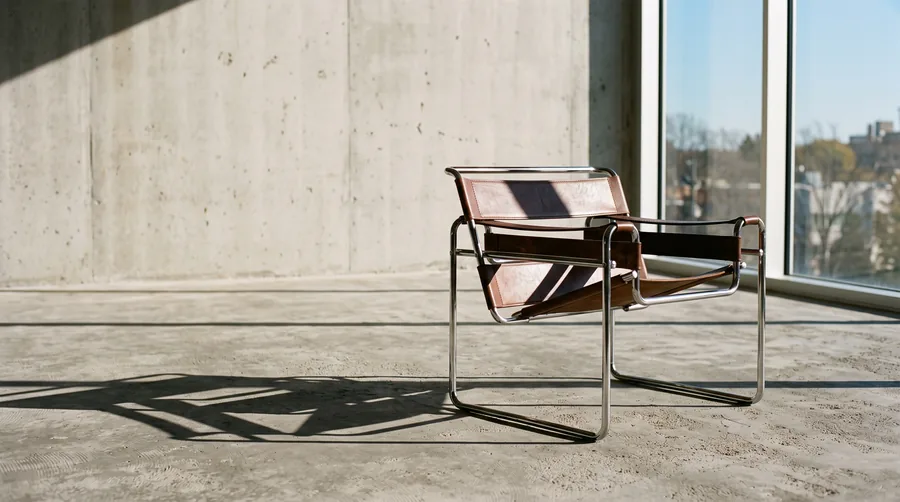
Unlacquered brass and bronze tarnish, and the tarnish is the point. A lacquered brass lamp stays bright until the lacquer fails, in patches, and then looks diseased. Chrome plating over steel is good when it is thick, and thick plating is what separates a licensed chair from a copy; thin chrome pits within a few years, especially near the sea. Powder-coated steel is honest and durable and does not age at all, which is its charm and its limit. Stainless steel scratches into a fine even matt that most people prefer to the mirror it began as.
Stone and ceramic
Marble etches with acid, which means a ring from a wine glass is permanent unless the top is honed again. Buyers of marble tables either know this and like it or do not and are unhappy. Travertine and limestone are more forgiving and more absorbent. Granite and quartzite do not care what you do. Glazed ceramic crazes slowly and beautifully; unglazed terracotta stains and becomes, over decades, the colour of a garden.
Textiles and foam
Linen and wool wear soft and fade evenly; both can be cleaned and both can be replaced, which is why a sofa should be judged by its frame and its foam rather than its cover. Foam is the material that ages worst in the entire room. All polyurethane foam loses resilience, and a cheap block collapses in five years, a good high-density one in fifteen to twenty. Several famous sofas from the 1970s are famous partly because their foam has been replaced twice by every owner. Feather and down cushions age well and need plumping; horsehair and springs, in the older classics, last a century.
The room that ages
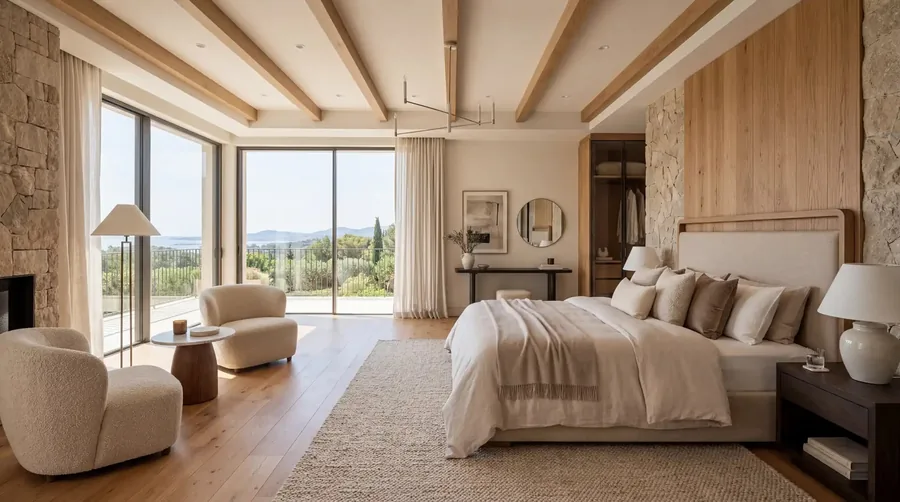
Put together a room from the first column of each answer and it will look better every year without effort: aniline leather, oiled oak, unlacquered brass, linen, honed limestone. Put it together from the second column and it will look new for six years and then need replacing all at once. The first room costs more on the day. The second costs more, twice, and is never photographed by anyone.